
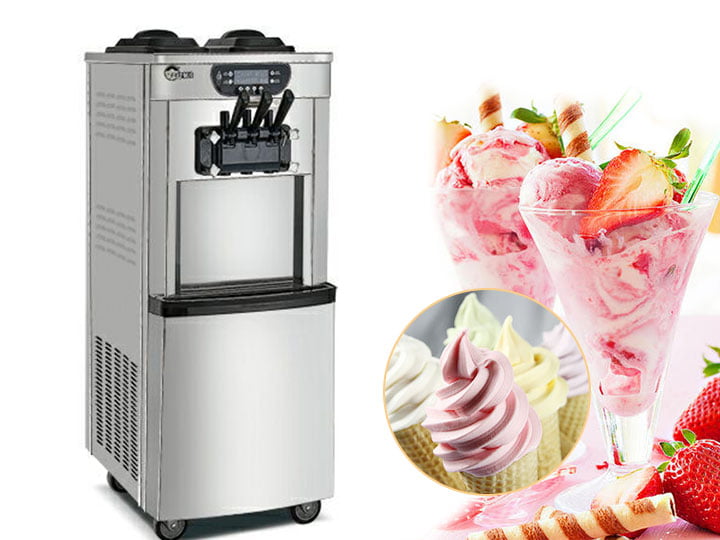
Walk into any ice cream shop in Italy and you’ll see thick, dense gelato stacked in metal tubs—scooped by hand, served immediately. Walk into a McDonald’s anywhere in the world and you’ll see soft serve spiraling out of a machine in three seconds. Both are ice cream. Both are popular. But the equipment, the economics, and the customer experience are fundamentally different.
If you’re opening a dessert business or adding frozen treats to an existing operation, you need to understand these differences. Choosing wrong means wasted investment, frustrated customers, and operational headaches.
This guide breaks down every meaningful difference between soft ice cream machines and hard ice cream equipment—so you can make the choice that fits your concept.
The Fundamental Difference
Before getting into specs and prices, understand what’s actually different about these two categories of equipment.
Soft serve machines produce and dispense product continuously. The ice cream mix goes in one end, gets frozen and aerated inside the machine, and comes out ready-to-serve. There’s no storage step. The customer orders, and the product is extruded immediately.
Hard ice cream equipment (also called batch freezers or gelato machines) freezes product in batches. You make a batch, freeze it, then transfer it to a display freezer for serving. The product sits frozen until a scoop is requested.
This difference drives everything else: speed, labor, storage needs, menu flexibility, and capital investment.
Product Characteristics
What your customers actually experience:
| Characteristic | Soft Serve | Hard Ice Cream / Gelato |
| Texture | Light, airy, fluffy | Dense, rich, creamy |
| Serving temperature | -5°C to -7°C | -12°C to -18°C |
| Air content (overrun) | 50-80% | 20-40% |
| Fat content | 3-6% | 10-18% |
| Production style | Continuous | Batch |
| Serving method | Extruded/swirled | Scooped |
These aren’t just technical details—they define your menu and customer experience. Soft serve is immediate and theatrical. Gelato is artisanal and premium. Your concept should drive your equipment choice, not the other way around.
Investment and Cost Comparison
Here’s what you’ll spend:
| Cost Category | Soft Serve Equipment | Hard Ice Cream Equipment |
| Entry-level equipment | $3,000 – $5,000 | $4,000 – $7,000 |
| Mid-range | $5,000 – $8,000 | $7,000 – $12,000 |
| High-capacity | $8,000 – $15,000 | $12,000 – $25,000 |
| Display freezer (required) | Not needed | $2,000 – $5,000 |
| Storage freezer (required) | Not needed | $1,500 – $4,000 |
| Initial investment | $3,500 – $17,000 | $8,000 – $36,000 |
Soft serve has a clear cost advantage here. You don’t need additional freezer equipment to store or display your product. The machine does both.
Speed and Throughput
This is where soft serve dominates. In a head-to-head serving speed comparison:
- Soft serve: 3-5 seconds per serving. Pull the handle, cone fills, done. One person can serve 150+ customers per hour with ease.
- Hard ice cream: 15-30 seconds per serving. Open freezer, scoop, close freezer, hand to customer. One person can realistically serve 60-80 customers per hour.
If you’re at an amusement park, cinema, or high-traffic convenience store, those seconds multiply quickly. A soft serve machine can handle volume that would require two or three hard ice cream scoopers.
However, if your concept is about the experience—watching a scoop be carefully placed, choosing from 20 flavors, building a elaborate sundae—then the slower pace is actually part of the appeal.
Menu Flexibility
What can you actually make with each type of equipment?
Soft Serve Capabilities
- Standard soft serve cones and cups
- Soft serve with toppings
- Affogatos (espresso over soft serve)
- Ice cream floats
- Soft serve in baked goods (waffle bowls, brioche)
Hard Ice Cream / Gelato Capabilities
- Scooped ice cream in unlimited flavors
- Sundaes and elaborate desserts
- Milkshakes and thickshakes
- Ice cream cakes
- Gelato in traditional style
- Artisanal presentations
If you want to offer 30 different flavors and let customers build complex creations, hard ice cream is your choice. If you want fast, consistent, single-item transactions, soft serve wins.
Labor and Training
Both types of equipment have relatively low training requirements, but there are differences:
| Factor | Soft Serve | Hard Ice Cream |
| Training time | 15-30 minutes | 30-60 minutes |
| Daily prep | Load mix, start machine | Prep base, freeze batches |
| Scooping skill needed | No | Yes |
| Recipe complexity | Simple—mix determines result | More complex—technique matters |
| Staff consistency | Very consistent output | Can vary by scooper |
Soft serve is more forgiving. A new employee can produce the same quality product as a veteran from day one. Hard ice cream requires more technique—scooping consistently, managing batch timing, balancing flavors.
Maintenance and Cleaning
Both require daily cleaning, but the routines differ:
- Soft serve: Daily cleaning cycle (15-20 minutes), weekly deep clean. The machine handles most of the work. Consistent routine, predictable time investment.
- Hard ice cream: Clean batch freezer, clean display freezer, manage product rotation. More touchpoints, more time. You’re also managing two pieces of equipment instead of one.
For operators who want “set it and forget it” simplicity, soft serve equipment has an edge.
Storage and Space Requirements
Where will this equipment live in your business?
| Requirement | Soft Serve | Hard Ice Cream |
| Floor space | 4-8 sq ft | 8-15 sq ft (including freezer) |
| Storage freezer | Not needed | Required |
| Display case | Not needed | Required |
| Electrical | 220V dedicated | 220V dedicated |
| Ventilation | 6″ all sides | 6″ all sides |
Soft serve is more compact. You need one machine. Hard ice cream requires a production freezer and a display freezer—significantly more equipment to buy, maintain, and find space for.
Which Should You Choose?
The answer depends entirely on your concept and priorities:
Choose soft serve if:
- Speed matters more than variety
- You want lower initial investment
- You have limited space
- Your customers want quick transactions
- You want simple, consistent operations
- You’re adding dessert to a non-dessert business (café, restaurant, convenience store)
Choose hard ice cream / gelato if:
- Variety and artisanal presentation are central to your concept
- You want to offer 20+ flavors
- Your customers expect a traditional ice cream experience
- You’re building sundaes and elaborate desserts
- You have the space and budget for multiple pieces of equipment
- Gelato authenticity is important to your brand
The Best of Both Worlds
Many successful dessert businesses don’t choose at all—they run both. A soft serve machine for quick transactions and a gelato case for the connoisseurs.
This approach maximizes your customer base: the “I want it now” customer gets soft serve in 5 seconds. The “I want something special” customer browses 24 flavors and builds a sundae.
Yes, it requires more investment and space. But many operators report that the combination outperforms either option alone. You’re not competing for one type of customer—you’re capturing both purchase moments.
Making Your Decision
Here’s the framework to use:
- What’s your concept? Fast and casual, or artisanal and experiential?
- What’s your traffic pattern? High volume and fast, or moderate and browsable?
- What’s your budget? Soft serve costs less to start.
- How much space do you have? Hard ice cream needs more.
- What’s your team like? Soft serve is more forgiving for newer staff.
Your answers will point you to the right equipment. And if you’re still uncertain, talk to suppliers who understand both options and won’t just try to sell you whatever they have in stock.
We offer both commercial soft ice cream machines and hard ice cream equipment. Our recommendation always starts with understanding your concept—not pushing inventory.
Reach out to discuss your specific situation. We’ll help you figure out which direction makes sense for your business.