
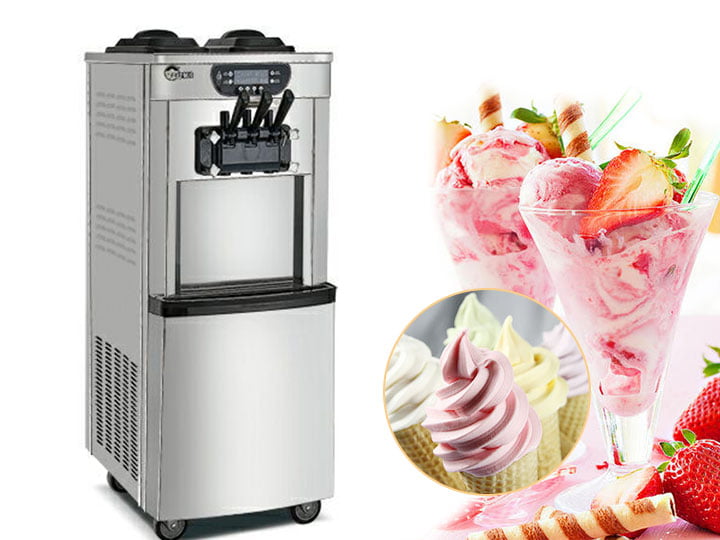
Walking into a grocery store freezer section, you see rows of pints requiring a scoop. At an amusement park, you watch fresh soft serve spiral out in under ten seconds. That difference—that instant, theatrical experience—is exactly what draws customers to businesses with the right commercial soft ice cream equipment.
But here’s where most buyers get stuck: they walk into a supplier’s catalog and suddenly face a dozen models with confusing specifications. Capacity ratings in liters per hour. Hopper sizes in liters. Power requirements that may or may not match their electrical setup. The options multiply, and decision fatigue sets in.
This guide cuts through that noise. We’ll walk through exactly what matters when selecting a soft serve dispenser, what specifications actually affect your daily operations, and how to match your business needs to the right machine.
Understanding Your Production Needs
Before looking at any equipment, you need a realistic estimate of how much soft serve you’ll actually produce. This isn’t a number you guess—it’s a calculation based on your expected customer traffic.
The basic formula: daily customers × 0.3 liters = minimum hourly production capacity
A typical soft serve serving runs about 150-200ml (0.15-0.2 liters). Using 0.3 liters as a generous baseline accounts for larger orders, waste, and sampling. Multiply that by your expected daily customer count, then divide by your operating hours.
Example: A café open 10 hours per day expecting 150 customers would need equipment producing at least 4.5 liters per hour. But here’s the catch—you don’t want to run your machine at 100% capacity constantly. That’s hard on the compressor and leaves no room for busy periods. Add a 30% buffer to that number. In this case, you’d look for a soft ice cream machine rated at 6 liters per hour minimum.
Overestimating is rarely a problem. Underestimating is expensive—you’ll have customers waiting, product quality suffers, and you’re constantly pushing the machine beyond its comfort zone.
What Actually Matters in a Soft Serve Dispenser
Salespeople will tell you about features. Marketing materials will highlight specifications. What they often miss are the components that matter most in real-world commercial use—day after day, rush hour after rush hour.
The Gear Pump
Think of the gear pump as the heart of your soft serve machine. It controls something called “overrun”—the amount of air mixed into your ice cream. Too much air and your product feels like foam. Too little and it’s dense and heavy.
Italian-made gear pumps have become the industry standard for a reason: they maintain consistent overrun across thousands of servings. That means every cone your customer buys has the same smooth, creamy texture—exactly what keeps them coming back.
Budget pumps might save you money upfront, but they drift over time. One day your product is perfect. Three months later, customers are asking why it tastes different. That’s not a problem you want to troubleshoot at 2pm on a Saturday.
Compressor Quality and Recovery Time
Recovery time matters more than most buyers realize. When you empty the hopper during a busy period, how long does it take to bring fresh product down to serving temperature?
Cheaper compressors take longer to recover. Premium compressors in quality soft ice cream makers recover in 3-5 minutes. Lesser models might take 10-15 minutes. In a high-traffic scenario, those extra minutes mean lost sales.
If you’re serving 100+ customers per hour during peak times, recovery time directly impacts your revenue. A quality compressor pays for itself in throughput.
Construction and Durability
Commercial soft serve equipment lives a rough life. Daily cleaning with sanitizers. Constant moisture. Occasional impacts from carts and containers. Weekend rush hours pushing the machine to its limits.
Look for stainless steel hoppers and freezing cylinders. This isn’t about aesthetics—it’s about resistance to corrosion from cleaning chemicals, durability against daily wear, and food safety that holds up over years of use.
Plastic components might be fine in a home kitchen. In a commercial environment, they crack, stain, and need replacement far more frequently.
Matching Machine Specs to Your Business Type
Different business types have different needs. Here’s how the most common scenarios map to equipment specs:
| Business Type | Recommended Capacity | Key Features |
| Boutique café (seating 20-40) | 15-25 L/h | Single hopper, compact footprint |
| Ice cream parlor | 40-60 L/h | Larger hopper, dual temperature zones |
| Restaurant with dessert service | 25-40 L/h | Consistent output, easy cleaning |
| Convenience store | 40-80 L/h | High throughput, durability |
| Entertainment venue/cinema | 60-80 L/h | Maximum output, rapid recovery |
| Hotel breakfast buffet | 20-35 L/h | Reliable morning operation |
Practical Considerations Beyond Specs
Electrical Requirements
This gets overlooked constantly. A high-capacity soft serve freezer might require a dedicated electrical circuit that your current setup can’t support. Before purchasing:
- Check the machine’s voltage requirements (single-phase 220V is common, but not universal)
- Verify your outlet can handle the amperage
- Consider whether you need an electrician to install a dedicated line
- Account for startup amps—some machines draw significantly more power when the compressor first kicks on
Nothing is more frustrating than new equipment that won’t run because your electrical panel can’t support it.
Space and Ventilation
Commercial soft serve dispensers need airflow. Most manufacturers specify minimum clearance requirements—typically 6 inches on all sides and 12 inches above. Cramming a soft ice cream maker into a tight corner causes overheating and premature component failure.
Measure your available space carefully. Then add those clearance requirements. Then check if the machine still fits.
Ease of Cleaning
Cleaning time is labor time. Some soft serve machines have overnight cleaning cycles that run automatically. Others require 30+ minutes of hands-on scrubbing.
If your staff is already stretched thin, that cleaning time becomes a hidden cost. Look for models with:
- Self-cleaning or automated cleaning cycles
- Removable parts that go through a commercial dishwasher
- Clear access to the freezing cylinder for manual cleaning
- Hopper designs that don’t trap product in hidden corners
Warranty and Support
A soft serve machine going down during your busiest weekend is a financial emergency. What separates good suppliers from great ones is what happens when things go wrong.
Look for:
- Warranty length: One year is standard. Some premium manufacturers offer longer coverage.
- Parts availability: Can they ship replacement parts overnight? Do they keep common wear items in stock?
- Technical support: Is there a support line, or do you wait for an email response?
- Documentation: Are operation manuals clear? Are troubleshooting guides available online?
We stock common replacement parts and ship same-day for most orders. That’s not something every supplier does—but it’s critical when your soft ice cream equipment is the centerpiece of your dessert business.
Your Decision Checklist
Before you finalize your purchase, run through this checklist:
- Have you calculated your required production capacity (with 30% buffer)?
- Does the equipment match your electrical setup, or will you need an electrician?
- Will it fit in your space with proper ventilation clearance?
- Does the gear pump come from a reputable manufacturer (preferably Italian)?
- Is the compressor robust enough for your peak-hour traffic?
- Can your staff handle the daily cleaning routine comfortably?
- What’s the warranty coverage and parts availability?
- Does the supplier have a track record with businesses like yours?
If you can check every box, you’ve found the right machine for your operation.
Need help running these numbers or matching your requirements to a specific model? Our team has helped hundreds of businesses make this exact decision. We don’t just list specifications—we ask about your space, your traffic, and your concept. Then we recommend what actually fits.
Browse our commercial soft ice cream machines or reach out directly. Tell us about your business and we’ll walk you through the options—no pressure, just guidance from people who understand this equipment.